
VILNIUS, LITHUANIA
Vilnius displays a variety of both architectural expression and willpower. This is perhaps due to the interesting history of this town, which has not always been the capital of Lithuania. However, for over five centuries, until the 18th century, Vilnius had been the political and cultural centre of the Grand Duchy of Lithuania. The Old Town of Vilnius was included in the UNESCO World Heritage List in 1994, because the town “has preserved an impressive complex of Gothic, Renaissance, Baroque and classical buildings as well as its medieval layout and natural setting”. In 2009, Vilnius was the European Capital of Culture. Shaped by its history, first as part of the Kingdom of Poland and then by the Russian invasion, Vilnius symbolises this land of passage and hospitality. The city asserts its independence, as exemplified by the Uzupis neighbourhood, which has declared itself an independent republic.
TRANSPORT INFO
How to get to Vilnius

Air
Vilnius airport (VNO) is just a bit more than 6 kilometres away from Vilnius city centre or Vilnius Old Town. Outside the airport, several buses are at your service. Bus No. 88 goes to the city centre and takes about 20 minutes. The 3G express bus is another excellent option, taking you directly from the airport to the city’s business district and central areas. The journey typically takes 20-25 minutes. Standard price for a single ticket is €1,25 for an hour.
There is also a train. Vilnius Airport has its own train stop just a short walk from the arrival terminal. A dedicated train whisks you directly to the main Vilnius Railway Station (Vilniaus Geležinkelio Stotis) in around 10 minutes, and the ticket costs €0.90. The station is located on the edge of the Old Town, making it a fantastic and fast option.
Getting around in Vilnius

Taxi
You can easily pick a taxi from the street or at ranks at the railway and bus station, or in the old town of Vilnius. It’s advisable, however, (it will be both cheaper and safer) to order a taxi by phone. There are many local taxi companies operating in town, as well as BOLT. Before sitting in, agree a price in advance of the journey and be sure the meter is switched on.

Car
If you are travelling around Vilnius by car, please note that parking in the city centre and Old Town is usually paid and divided into different parking zones. Parking conditions and prices depend on the location and type of parking. You can also use parking lots, Park & Ride facilities, or short-term Kiss & Ride spaces for quick stops. For up-to-date information about parking zones, payment methods, permits and parking maps, visit the official JUDU page.

Bus & Trolleybus
The most common way to travel around the city is by using the extensive network of buses and trolleybuses. You’ll easily spot the modern buses, which form the core of the public transport system. A single ticket for 30 min is 1€ and 1,25€ for 1 hour. Day tickets range from 7,50€ for one day to 13,50€ for three days. More information about buses, timetables and prices can be found here.

E-scooters and bikes
You’ll find e-scooters from providers like Bolt and CityBee scattered throughout the city. Using their respective apps, you can unlock a scooter and pay by the minute. Just remember to ride safely in bike lanes where available and park responsibly.
Practical tips – Need to know
Language: Lithuanian
Currency: EUR Euro
Time zone: EET
Country code: + 370
Voltage: 230 V
Electrical socket: Type F
Tourist Contacts:
+370 5 262 9660
Internet Resources:
https://www.govilnius.lt/tourist-information-centres
General emergency number: 112
Explore city centre
Uzupis
Self-styled as the “Republic of Uzupis”, this quirky neighbourhood within the city is known for its artistic spirit and bohemian charm. Streets are lined with colourful murals and sculptures of all shapes and sizes, while independent art galleries within the district often host art shows and exhibitions. The character of Uzupis is neatly defined by the “Constitution of Uzupis”. This tongue-in-cheek document is engraved in English, French, Lithuanian and several other languages on plaques running along Paupio street and outlines the rights of its citizens, including the right to be happy.
Gediminas Tower
Climb the iconic Gediminas Tower, a symbol of Vilnius and the remnants of a once-grand castle. Standing atop Gediminas Hill, the tower offers panoramic views across the city’s red-tiled rooftops and winding Neris River. The tower is an important part of Lithuania’s national history. It was depicted on the country’s former currency (the litas) and is often referenced in national folk songs. If you want to learn more about the history of Gediminas, a museum is housed within the tower walls. Exhibits include archaeological finds from the hill as well as model reconstructions of the tower and its castle during its golden era.
Vilnius Old Town
Founded in 1387 by Lithuanian Grand Duke and King of Poland Jogalia in 1387, Vilnius’ Old Town is one of the largest surviving medieval towns in Northern Europe. 70 streets and nearly 1500 buildings, rewarding it the status of a metropolis in its own right.
Marvel at architectural gems such as the Gothic St. Anne’s Church and the baroque Vilnius Cathedral, or get lost in the maze of cobblestone. If you fancy stopping for something to eat or drink, take a stroll down Pilies Street, the main hub of Old Town activity and the home to dozens of cosy cafes and eateries.
The Palace of the Grand Dukes of Lithuania
During the 15th, 16th centuries and the first half of the 17th century, the Palace of the Grand Dukes was a political, diplomatic, administrative and cultural centre of the Grand Duchy of Lithuania. At the beginning of the 19th century, at the initiative of the tsarist Russian administration, the residence of Lithuanian rulers was destroyed and restored only in 2013. The National Museum, at the Palace of the Grand Dukes of Lithuania, has four main routes that can be viewed that reflect the functions of this historic residence.
Cathedral Basilica and Bell Tower
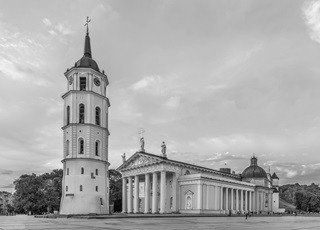
This shrine is a symbol of Lithuanian baptism. The Cathedral Basilica of St. Stanislaus and St. Ladislaus are built in the very centre of the city on the site of a former pagan temple and next to Vilnius’ defensive castle. Lithuania’s patron saint, St. Casimir, rests in the Cathedral Basilica. Jurgis Matulaitis served as the basilica’s bishop from 1918 to 1925. On 4 September 1993, the Holy Father John Paul II began his historic apostolic journey through Lithuania at the Vilnius Cathedral. A 57-metre-tall bell tower stands right by the cathedral and is one of the symbols of Vilnius.